You launched your app on a major cloud provider. The pricing calculator showed $47/month. You felt confident.
Three months later, your credit card gets charged $523. Then $611. Then $789.
You check the dashboard. Your traffic hasn't changed. Your database is the same size. You haven't added new features. Yet somehow, your cloud bill has 10x'd.
If this sounds familiar, you're not alone. According to a 2025 Backblaze survey, 95% of IT leaders have encountered unexpected cloud charges that disrupted budgets and slowed projects[1]. In 2026, networking-related charges alone now represent an "hidden 18% tax" on total cloud spend for organizations running multi-cloud or hybrid architectures[2].
Welcome to the reality of cloud infrastructure pricing—where the advertised price is just the beginning of the story.
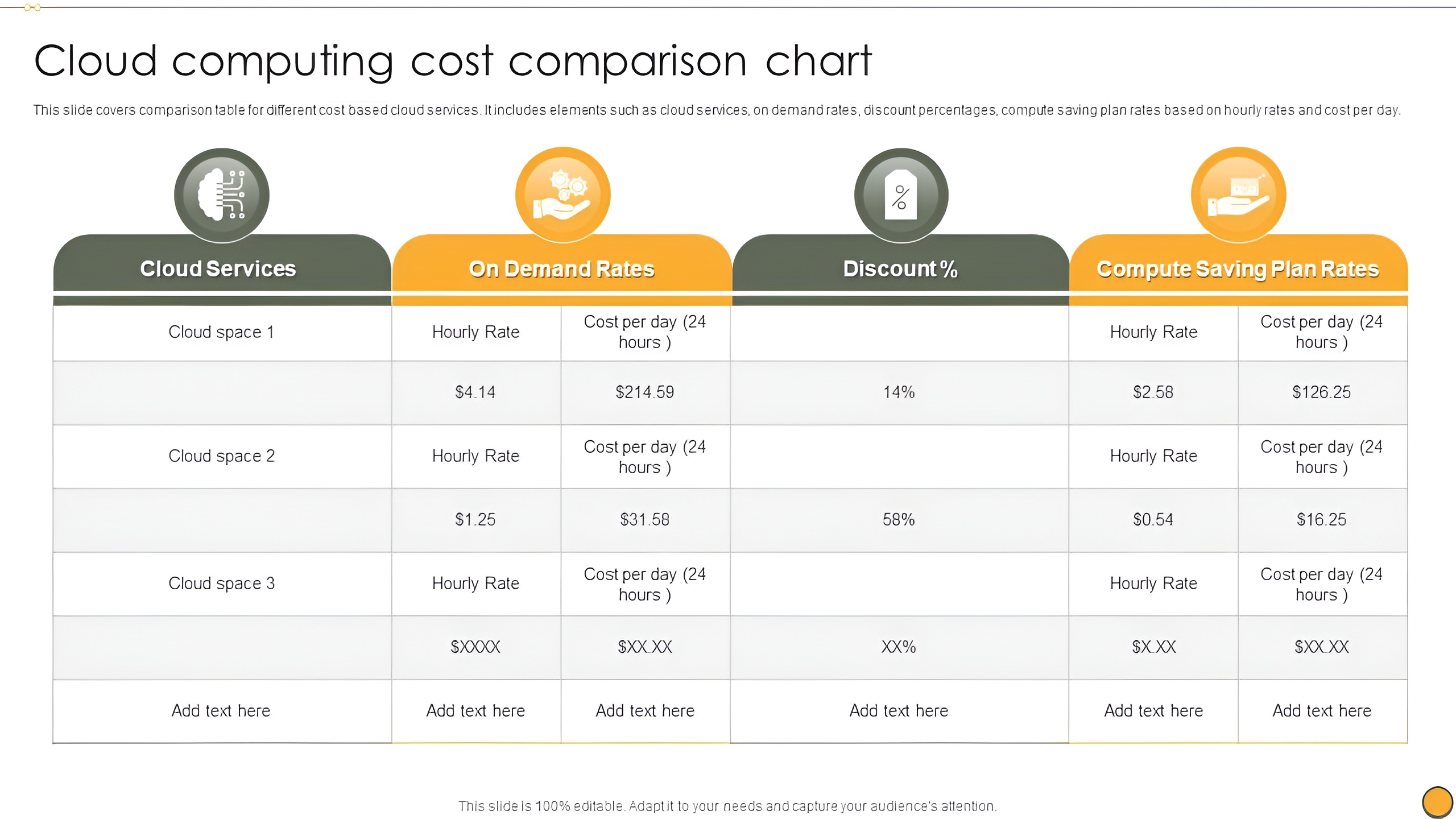
The $50 Promise vs. The $500 Reality
Let's break down what actually happens when you move from development to production.
What the Pricing Calculator Shows You
When you use AWS, Google Cloud, or Azure's pricing calculator, you typically see:
- Compute: $15/month for a small VM
- Database: $25/month for managed PostgreSQL
- Storage: $5/month for 100GB
- Load Balancer: $2/month
Total: ~$47/month
Seems reasonable, right?
What They Don't Show You
The calculator conveniently hides the costs that actually matter in production:
- Data Transfer (Egress) Fees: $0.08 - $0.19 per GB
- NAT Gateway: $32.40/month base + $0.045 per GB processed
- Load Balancer Processing: $0.008 per GB + hourly charges
- Cross-AZ Data Transfer: $0.01 - $0.02 per GB
- IPv4 Public Addresses: $3.65/month per address (since Feb 2024)
- Monitoring & Logging: Variable, often $50-200/month
- Database Backups: $0.10 per GB-month
- DNS Queries: $0.40 per million queries
And here's the kicker: none of these appear in the basic pricing calculator.
The Hidden Costs That Kill Your Budget
Let me walk you through each hidden cost and show you the real numbers from 2026.
1. Egress Fees: The Cloud Tax You Can't Escape
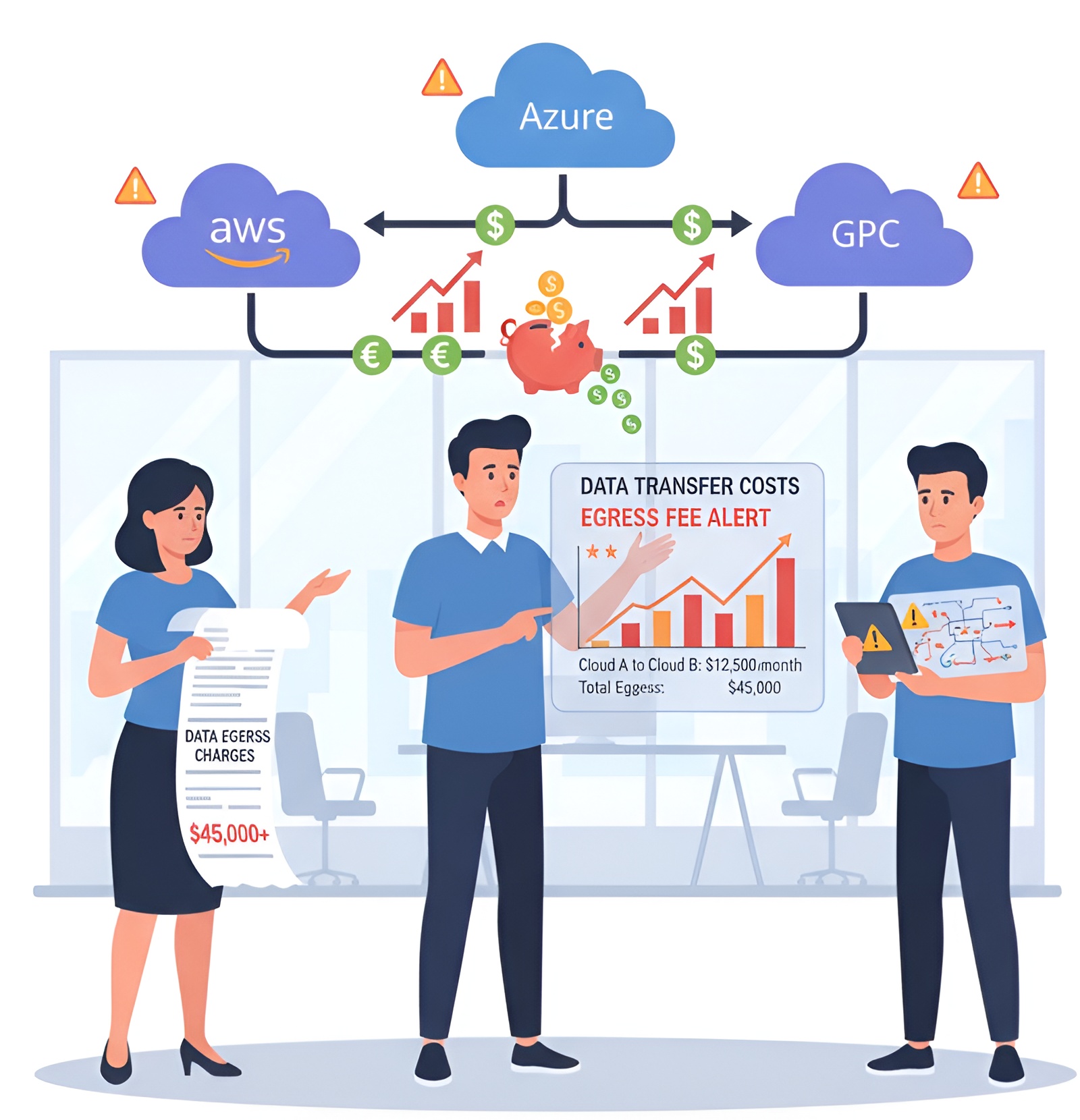
Egress fees are charges for moving data out of a cloud provider's network. Here's the shocking part: ingress (data going in) is free, but egress is where they get you.
Current Egress Pricing (2026):
- AWS: $0.09 per GB (after first 100GB free)[3]
- Azure: $0.087 per GB[4]
- Google Cloud: $0.12 per GB (first 1TB)[5]
Let's do the math for a typical web application:
Average API Response Size: 100KB
Monthly API Calls: 5 million
Total Data Transfer: 500GB

AWS Egress Cost: 500GB × $0.09 = $45/month
Azure Egress Cost: 500GB × $0.087 = $43.50/month
GCP Egress Cost: 500GB × $0.12 = $60/month
That's $45-60/month just for sending data to your users—a cost that doesn't show up in any calculator.
The Lobster Trap Effect
As noted by cloud infrastructure experts, egress fees function as a "lobster trap"[6]: data goes in for free, but getting it out comes at a cost. NASA discovered this the hard way when they signed a $65 million annual AWS agreement, only to find that unanticipated egress fees could add another $30 million per year—nearly half the value of the original contract[6].
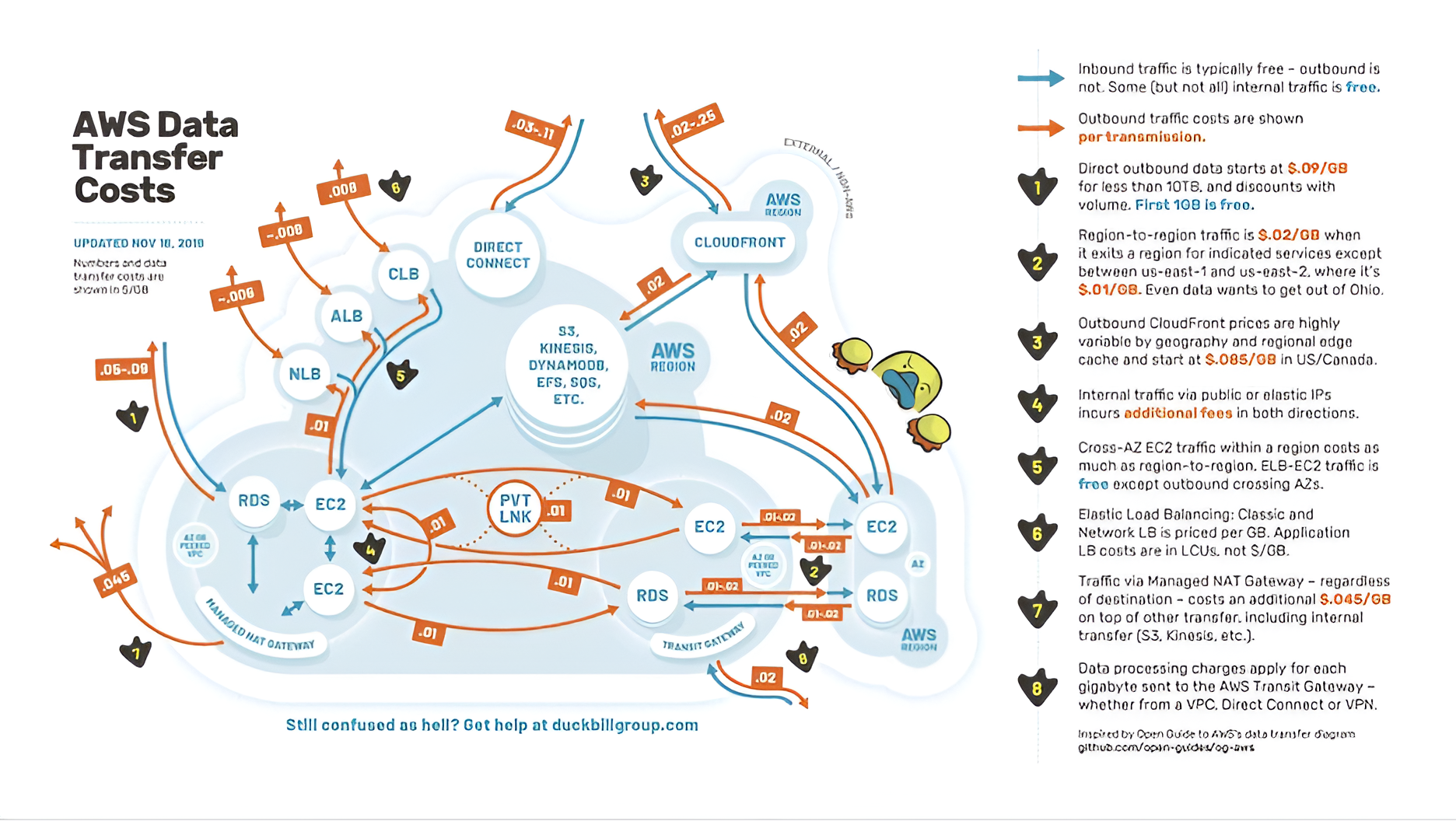
2. NAT Gateway: The Silent Budget Killer
NAT Gateways allow instances in private subnets to access the internet securely. They're essential for production deployments. They're also expensive and poorly documented.
NAT Gateway Costs (AWS - US East):[7]
- Hourly Charge: $0.045/hour ($32.40/month) per gateway
- Data Processing: $0.045 per GB processed
- Recommended Setup: 1 gateway per Availability Zone
For a standard 3-AZ production setup:
Base Cost: 3 gateways × $32.40 = $97.20/month
Data Processing (500GB): 500GB × $0.045 = $22.50/month
Cross-AZ Transfer: 100GB × $0.02 = $2/month

Total NAT Cost: $121.70/month
And remember: this is before any internet egress fees. NAT Gateway processing is charged in addition to standard data transfer charges[8].
The Hidden Traffic
What most teams don't realize is that internal services generate massive NAT Gateway traffic:
- Docker image pulls from ECR: Every deployment
- S3 API calls: Every file upload/download
- CloudWatch logs: Constant streaming
- Package manager updates: apt, yum, npm installs
According to recent analysis, a single Kubernetes node pulling 1TB of container images through Cloud NAT on a rebuild day generates about $46 in data processing fees alone[9].
3. IPv4 Address Charges: The 2024 Surprise
Since February 2024, AWS began charging $0.005 per hour ($3.65/month) for every public IPv4 address[10]—whether it's in use or sitting idle.
Let's count the addresses in a typical production environment:
3 EC2 Instances: 3 IPv4 addresses
1 Load Balancer: 2 IPv4 addresses
1 RDS Database: 1 IPv4 address
2 NAT Gateways: 2 IPv4 addresses
3 Idle Elastic IPs: 3 IPv4 addresses

Total: 11 IPv4 addresses × $3.65 = $40.15/month
For enterprise environments running hundreds of microservices, this can easily reach $20,000+ annually[10].
4. Cross-Region & Cross-AZ Data Transfer
Here's a cost that shocks most developers: data transfer within the same cloud provider costs money if it crosses certain boundaries.
AWS Inter-AZ Transfer (Same Region):[11]
- $0.01 per GB in each direction (that’s $0.02/GB round-trip)
For a multi-AZ database setup with replication:
Database Write: 100GB/month
Replicated to 2 other AZs: 200GB total
Cross-AZ Cost: 200GB × $0.02 = $4/month
Doesn't sound like much? Now scale that to a microservices architecture with 20 services, each making API calls across AZs:
20 services × 50GB each = 1TB cross-AZ traffic
Cost: 1TB × $0.02 = $20/month minimum
According to Google Cloud's networking analysis, multi-zone Kafka clusters with replicas spread across zones can generate ten TB per month of inter-zone traffic, costing around $100/month—and that's just for a single Kafka cluster[12].
5. Load Balancer Processing Fees
Application Load Balancers charge you in multiple ways:
AWS ALB Pricing (US East):[13]
- Hourly: $0.0225/hour ($16.20/month)
- LCU (Load Balancer Capacity Unit): $0.008 per LCU-hour
LCU charges are based on: new connections per second, active connections, processed bytes, and rule evaluations.
For a moderately busy application:
Traffic: 500GB/month processed
Connections: 100,000 active
LCU Hours: ~500/month

LCU Cost: 500 × $0.008 = $4/month
Base Cost: $16.20/month

Total ALB: $20.20/month per load balancer
6. Monitoring, Logging & Hidden Observability Costs
Production apps need monitoring. But observability platforms are expensive:
CloudWatch Costs (AWS):
- Logs Ingestion: $0.50 per GB
- Logs Storage: $0.03 per GB-month
- Custom Metrics: $0.30 per metric-month
- API Requests: $0.01 per 1,000 requests
For an application generating 100GB of logs per month:
Log Ingestion: 100GB × $0.50 = $50/month
Log Storage (retained 30 days): 100GB × $0.03 = $3/month
Custom Metrics (50 metrics): 50 × $0.30 = $15/month

Total Monitoring: $68/month
According to recent cost audits, organizations with 100+ services typically see monitoring and logging consume 10-15% of their total cloud spend[2].
Real Example: From $50 to $500
Let's trace exactly how a simple app's costs escalate:
Development Environment ($47/month)
1 t3.small EC2: $15
1 db.t3.micro RDS: $25
100GB EBS: $5
Basic ALB: $2

Total: $47/month
Production Environment ($512/month)
COMPUTE
3 t3.medium EC2 (multi-AZ): $90
3 IPv4 addresses: $11

DATABASE
1 db.r5.large RDS (multi-AZ): $280
Backup storage (500GB): $50
1 IPv4 address: $3.65

NETWORKING
1 Application Load Balancer: $20
NAT Gateway (3 AZ): $97
Data Processing (500GB): $22.50

DATA TRANSFER
Egress to users (300GB): $27
Cross-AZ transfer (200GB): $4

STORAGE & MONITORING
500GB EBS: $50
CloudWatch Logs: $68

TOTAL: $723.15/month
Cost increase: 15.4x the initial estimate.
And we haven't even included: backup retention beyond 7 days, database snapshots, DDoS protection, SSL certificates, DNS hosting, or support plans ($100-15,000/month).
Why This Happens: The Business Model
Cloud providers aren't trying to trick you. This pricing structure is intentional and strategic:
1. Loss Leader Strategy
Compute and storage are priced competitively (sometimes at a loss) to get you in the door. The real profit comes from data transfer, managed services, premium features, and support plans.
2. Complexity as a Moat
According to AWS hidden cost analysis, "AWS's complexity and counterintuitive architecture require significant engineering expertise to manage effectively. Tasks that take a day on competing platforms may take a week on AWS"[14].
This complexity means: you need expensive DevOps engineers, you might hire consultants, and you're less likely to switch providers.
3. The Lock-In Effect
Egress fees make migration expensive. If you want to move 10TB of data to another provider:
AWS Egress: 10,000GB × $0.09 = $900
Azure Egress: 10,000GB × $0.087 = $870
GCP Egress: 10,000GB × $0.12 = $1,200
That's $900-1,200 just to get your own data out. Surveys show that egress costs are the single largest barrier to switching cloud providers[15].
How to Optimize and Save 40-70%
The good news: you can dramatically reduce these costs with the right strategies.
1. Use VPC Endpoints (Save 40-70% on NAT)
VPC Gateway Endpoints (free): route S3 and DynamoDB traffic directly, with no NAT Gateway charges.
VPC Interface Endpoints ($0.01/GB vs $0.045/GB): ECR (container images), CloudWatch, SQS, SNS.
According to optimization studies, enabling VPC endpoints can reduce NAT Gateway costs by 40-70%[16].
2. CDN Offloading for Static Assets
Instead of serving files directly from your compute:
Before: 1TB served from EC2
Egress Cost: $90/month

After: 1TB served from CloudFront
CDN Cost: $85/month first 10TB ($0.085/GB)
Savings: ~40% + better performance
3. Regional Consolidation
Minimize cross-region transfers by co-locating dependent services:
Before: Database in us-east-1, App in us-west-2
Cross-region transfer: 500GB × $0.02 = $10/month

After: Both in us-east-1
Cross-region transfer: $0/month
4. Compression
Enable gzip/brotli compression on API responses:
Before: 500GB uncompressed responses
After: 200GB compressed (60% reduction)

Egress Savings: 300GB × $0.09 = $27/month
5. Right-Size Resources
Use tools like AWS Compute Optimizer to identify over-provisioned instances, underutilized databases, and idle resources. Many organizations find 20-30% of resources are oversized[17].
6. Reserved Instances for Stable Workloads
For predictable workloads:
On-Demand t3.medium: $30.37/month
1-Year Reserved: $19.71/month (35% savings)
3-Year Reserved: $12.48/month (59% savings)
7. Delete Unused Resources
According to cost audits, the most common wastes are idle Elastic IPs ($3.65/month each), forgotten NAT Gateways in dev ($32.40/month each), old EBS snapshots ($0.05 per GB-month), and stopped instances with attached EBS (still charged for storage).
The BuildSpace Perspective
At BuildSpace, we've watched developers struggle with these hidden costs for years. That's why we're building infrastructure that offers transparent pricing, fixed monthly costs, a global edge network, and managed services included—so your bill isn't a mystery that 10x's in production.
Key Takeaways
- The advertised price is 10-15% of the real cost in production
- Egress fees are the biggest surprise: $0.08-$0.19 per GB
- NAT Gateways add $100-1,000/month depending on traffic
- IPv4 addresses now cost money: $3.65/month each since 2024
- Cross-AZ transfer isn't free: $0.01-0.02 per GB
- Monitoring can cost more than compute: $50-200/month typical
- Optimization can save 40-70%: VPC endpoints, CDN, compression
Before You Deploy to Production
Ask yourself:
- ✅ Have I accounted for egress fees in my projections?
- ✅ Do I need a NAT Gateway in every AZ, or can I optimize?
- ✅ Am I using VPC endpoints for S3 and other AWS services?
- ✅ Have I enabled compression on API responses?
- ✅ Are my resources right-sized or over-provisioned?
- ✅ Do I have monitoring/alerting on my cloud costs?
- ✅ Have I reviewed cross-AZ and cross-region traffic patterns?
The difference between a $50 estimate and a $500 bill often comes down to knowing what questions to ask.
Conclusion
Cloud infrastructure pricing isn't broken—it's just deliberately opaque. The business model relies on developers underestimating costs and getting locked in through egress fees and architectural complexity.
But armed with this knowledge, you can build cost into your architecture from day one, optimize aggressively, choose providers that align pricing with your needs, and avoid surprises that blow up your budget.
The cloud can be incredibly cost-effective—if you know what you're paying for.
Sources & Citations
- Backblaze Survey (2025). "Nearly 95% of IT leaders have encountered unexpected cloud charges." Source: OpenMetal - The Hidden Costs of Cloud Services
- ByteIota Analysis (2026). "Networking-related charges now represent an 'hidden 18% tax' on total cloud spend." Source: FirstPassLab - Cloud Networking Hidden Costs
- AWS Data Transfer Pricing (2026). Source: CloudCostChefs - IPv4 and Egress Fees
- Azure Egress Pricing (2026). Source: Akave Cloud - No More Egress Fees
- Google Cloud Egress Pricing (2026). Source: SpendArk - Cloud Egress Costs Guide
- Micrologic Analysis (2026). "NASA egress fees could add $30 million per year." Source: Micrologic - Cloud Costs in 2026
- AWS NAT Gateway Pricing. Source: AWS VPC Pricing
- Wring Blog (2026). Source: Wring - AWS NAT Gateway Pricing Guide
- ComputingForGeeks (2026). Source: GCP Costs Explained
- FirstPassLab (2026). "AWS charges $0.005/hour for every public IPv4 address since Feb 2024." Source: Cloud Networking Hidden Costs
- AWS Data Transfer Pricing. Source: Amazon EC2 Pricing
- ComputingForGeeks (2026). "Multi-zone Kafka cluster: 10TB/month inter-zone traffic = $100/month." Source: GCP Costs Explained
- AWS Application Load Balancer Pricing. Source: AWS ELB Pricing
- CostBench Analysis (2026). Source: AWS Hidden Costs
- OpenMetal (2026). "Egress costs are the single largest barrier to switching cloud providers." Source: Hidden Costs of Cloud Services
- OneUptime Analysis (2026). "VPC endpoints can reduce NAT costs by 40-70%." Source: referenced in FirstPassLab analysis.
- Industry standard from AWS Compute Optimizer and similar tools, widely reported across cloud cost optimization literature.
Want to learn more about transparent cloud pricing? Follow BuildSpace for insights on modern infrastructure without the hidden fees.
About BuildSpace: BuildSpace is building the next generation of cloud infrastructure with transparent pricing, managed APIs, and global performance. No egress fees. No NAT Gateway charges. No surprises. Learn more at buildspace.site